Completeness
Find employee records and requirements that need attention.

For HR operations
Turn daily HR administration into visible, repeatable workflows with the employee record as the shared source of context.
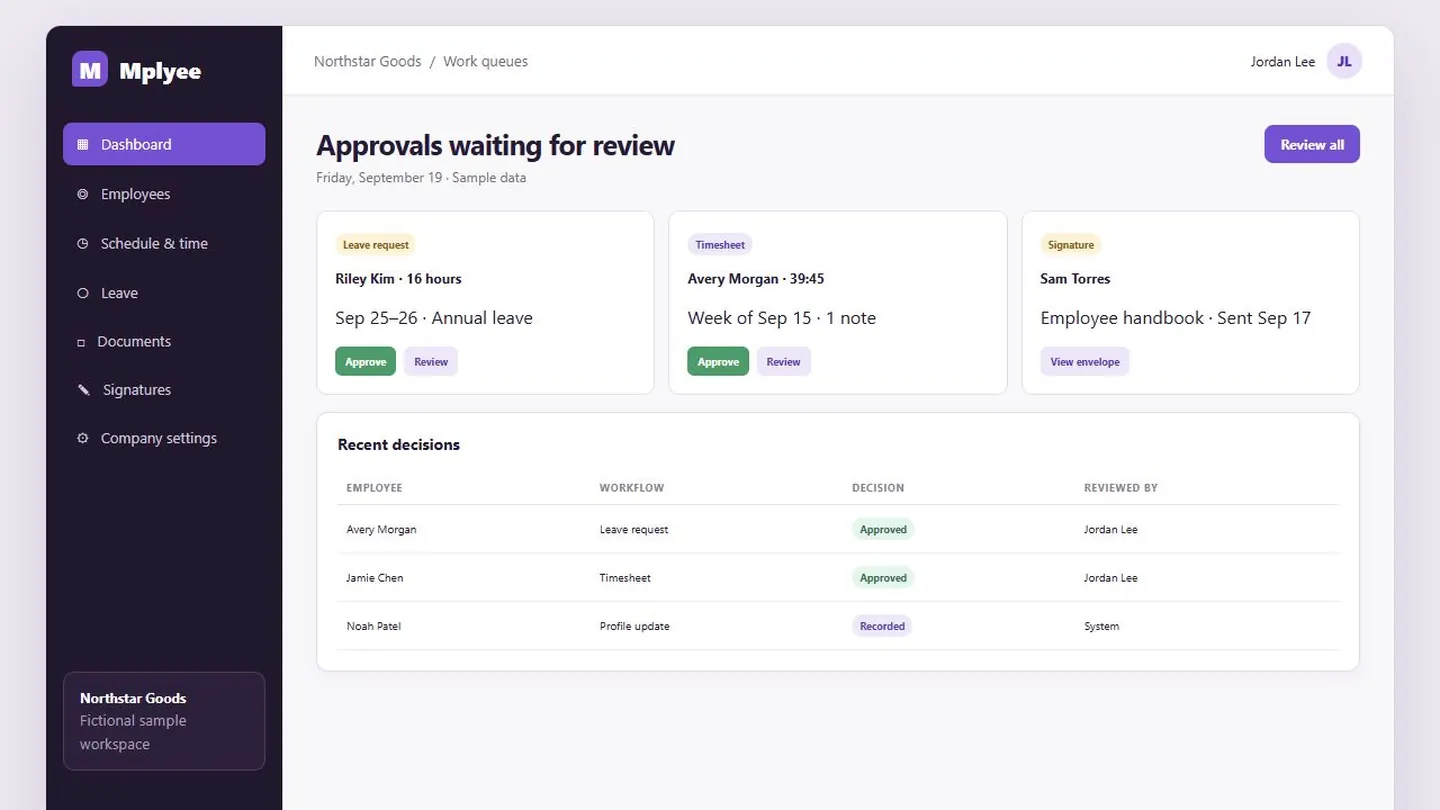
The operational problem
A request can wait in email, an employee record can stay incomplete, and a required document can be missed. Mplyee gives each exception a visible status and a clear next action.
How it works
Set the organization structure, policies, and requirements.
Work from queues for time, leave, signatures, and missing information.
Keep employees informed through self-service and retain the operational history.
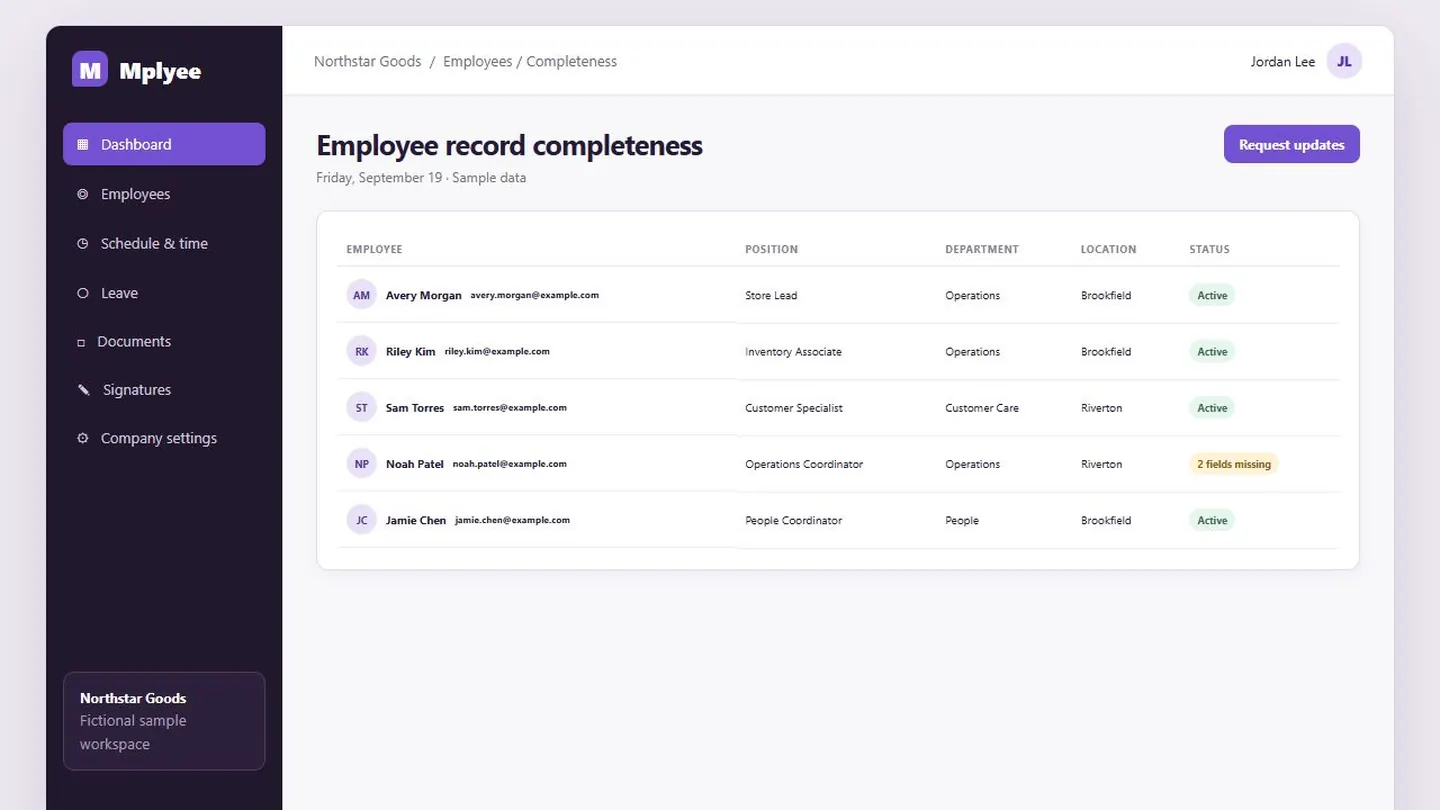
The product in practice
HR generalists and operations leads can administer policies, review work, and maintain dependable records without rebuilding context for every task.
Capabilities
Find employee records and requirements that need attention.
Separate pending requests from completed decisions.
Maintain the rules behind leave and employee workflows.
Keep planned work accessible to employees and managers.
Connect requirements, uploads, and signatures.
Move appropriate updates and actions to employees.
Questions about For HR operations
Mplyee supports review-oriented workflows for submitted timesheets, leave requests, document completion, signatures, and missing employee information.
Yes. Role-aware application views keep manager and employee tasks focused while administrators retain the broader operating view.
A clearer way to run the work
Start free for up to 25 employee records.
Start free